adsense

martes, 5 de julio de 2016

LA PORCIUNCULA Y LA SOPA DEL PERDON / THE SACRED SOUP.


La tradicional Fiesta de Santa María Reina de los Ángeles, conocida como "fiesta de la Porciúncula", congregó ayer a cientos de personas en los templos, conventos y casas franciscanas en distintas ciudades del Perú y a nivel mundial.


El famoso "puchero franciscano" es una sopa o menestrón elaborado con productos obtenidos de donaciones caritativas (choclo, papa, diversas carnes, col, habas, etc.) y se comparte con todas las personas que asiste a la misa.
Esta festividad se vivió ayer con mucho fervor y alegría, reviviendo el mismo espíritu que la celebración tuvo en sus orígenes hace más de ochocientos años. En Perú se realiaz hace  alrededor de trescientos sesenta años.


En el Convento San Francisco de Lima, en el Convento de los Descalzos del Rímac y en diferentes casas de las fraternidades de la Orden Franciscana Seglar, se compartíó la "Porciúncla" (porción).


En otras ciudades, como Trujillo y Arequipa también los franciscanos compartieron el puchero, luego de la celebración de la Santa Misa.

En la "Ciudad Blanca", el diario Correo de Arequipa informó que "más de mil personas desde las 12:00 horas de hoy (ayer) disfrutaron del "Puchero", que se preparo en la Tercera Orden Franciscana de Arequipa, al celebrarse la fiesta de Porciúncula que la organiza el Consejo Regional de la Orden Franciscana Seglar del Sur que tiene como Ministra a la hermana Blanca Pacheco de Álvarez, quien indicó que gracias al apoyo de muchas personas se pudo atender a personas de toda condición social y especialmente a las más pobres.

Agrega el periódico sureño que "la actividad se inició con la misa dedicada a la Virgen Santa maría de Los Ángeles de la Porciúncula, que fue celebrada por el padre Luis Avalos Navarro en la Iglesia de la Tercera Orden Franciscana".
Cabe señalar que en esta fiesta hay una indulgencia plenaria concedida por la Iglesia Católica, por lo cual también se le conoce como la "Fiesta del perdón".


ORÍGENES DE LA PORCIÚNCULA
Fr. Tomás Gálvez.
En la segunda mitad de julio de 1216, cuando faltaba poco para el 2 de agosto, primer aniversario de la consagración de Santa María de la Porciúncula, Francisco se presentó con fray Maseo ante el papa, y le pidió "una indulgencia para el aniversario de la consagración, sin necesidad de limosnas". El papa se sorprendió, pues la ayuda económica era imprescindible en estos casos. Con todo le ofreció un año, más de lo habitual, pero al Santo le pareció poco uno, dos, tres o siete años, y replicó: "Plazca a vuestra santidad concederme almas, no años". Y, ante la extrañeza del pontífice, le explicó: "Quiero, si place a vuestra santidad, por los beneficios que Dios ha hecho y aún hace en aquel lugar, que quien venga a dicha iglesia confesado y arrepentido quede absuelto de culpa y pena, en el cielo y en la tierra, desde el día de su bautismo hasta el día y hora de su entrada en ella ".


La perplejidad del papa estaba más que justificada: el Concilio Lateranense IV, pocos meses antes había limitado a un año la indulgencia para la dedicación de una iglesia, y a sólo cuarenta días para el aniversario, con el fin de favorecer la única indulgencia plenaria que existía entonces, la de Ultramar, establecida por el Concilio de Clermont (1095) con motivo de la Primera Cruzada. En un principio estaba reservada a los peregrinos de Tierra Santa y a los cruzados, pero el Concilio acababa de hacerla extensiva a quienes colaboraran materialmente con la Cruzada. Por tanto, una indulgencia plenaria sin riesgo físico ni coste económico, con la sola condición de acudir a la Porciúncula sinceramente arrepentidos, era algo inconcebible; de ahí que el papa respondiera: "Mucho pides, Francisco. La Iglesia no suele conceder tales indulgencias". A lo que él replicó: "Messer, lo que pido no viene de mí, es el Señor quien me envía". Entonces el pontífice exclamó, por tres veces: "¡Me agrada que la tengas!".

Pero los cardenales, temiendo el golpe que tal indulgencia podía suponer para la Quinta Cruzada que se estaba organizando, hicieron notar enseguida al pontífice que tal concesión echaba por tierra la de Ultramar, mas él argumentó: "Se la hemos concedido y no podemos echarnos atrás, pero la limitaremos a un solo día natural", y así se lo comunicó a Francisco, quien, por respuesta, hizo una reverencia y se dispuso a marcharse, pero el Papa lo detuvo, diciéndole: "¡Simple! ¿A dónde vas sin documento alguno?" "Me basta vuestra palabra -replicó él, alérgico como era a los privilegios-. Si es de Dios, ya se encargará de manifestarla. No quiero documentos. Que la Virgen sea el papel, Cristo el notario y los ángeles, testigos".

Logrado su objetivo, Francisco regresó, contento, a Asís. Al llegar a Collestrada se detuvo a descansar y a orar junto al leprosería. Poco después llamó a Maseo y le dijo: "De parte de Dios te digo que la indulgencia concedida por el papa ha sido confirmada en el cielo".


Los biógrafos más antiguos no mencionan expresamente esta importante concesión pontificia, pero cuentan que un hermano muy espiritual, a quien Francisco quería mucho (probablemente fray Silvestre), antes de su conversión soñó que en torno a la iglesita de la Porciúncula había una multitud de personas ciegas, de rodillas, con el rostro y las manos levantadas al cielo y pidiendo a Dios, con lágrimas, luz y misericordia. Y, de repente, un gran resplandor del cielo los envolvió y les devolvió la vista.

La referencia explícita más antigua y autorizada sería una carta de San Buenaventura, ministro general entre 1257 y 1273, hoy desaparecida, inventariada en 1375 en la biblioteca papal de Aviñón bajo el título: "De indulgentia Beate Marie Portuensi (léase Portiunculae) Assisii". Pero los testimonios más importantes fueron los recogidos por fray Ángel de Perusa, ministro de la provincia umbra de San Francisco (1276-7), que sirvieron de base para el Diploma del obispo Teobaldo de Asís (1310), que es el relato más completo y autorizado.


Entre los testigos estaba Pedro de Zalfano, presente el 2 de agosto de 1216 en la Porciúncula, donde "oyó predicar a San Francisco en presencia de siete obispos, y llevaba un papel en la mano, y dijo: Os quiero llevar a todos al paraíso, y os anuncio una indulgencia que tengo de boca del sumo pontífice. Y todos los que vengan hoy, y los que vendrán cada año, este mismo día, con corazón bueno y contrito, tendrán la indulgencia de todos sus pecados. Yo la quería para ocho días, pero sólo pude conseguir uno". Aunque Pedro de Zalfano hace coincidir la proclamación con "la consagración", según una nota del Sacro Convento de Asís, de la primera mitad del siglo XIII, y el testimonio de Giacomo Coppoli, que se lo oyó decir a fray León, lo que se celebraba ese día era el primer aniversario de la consagración.

La concesión, por voluntad de Francisco, nunca estuvo avalada por ninguna bula, de ahí que, años más tarde, algunos dudaran de la misma, y fue por ese motivo por el que frailes y asisanos se vieron obligados a recoger testimonios jurados de los pocos testigos directos y indirectos que aún vivían. Sin embargo, ningún papa se manifestó nunca contrario, más bien la confirmaron y, poco a poco, la fueron haciendo extensiva a otras muchas iglesias. Además, la ignorancia sobre el tema unos siglos después llevó a creer que la Indulgencia se podía obtener en la Porciúncula todos los días del año, y también esto fue aceptado por diversos pontífices, no sólo para Santa María, sino también para la Basílica de San Francisco. En cierto modo se han cumplido las palabras del Santo, cuando dijo: "Si es obra de Dios, ya se encargará él de manifestarla".


Colaboraciones con al Porciuncula en Lima: (511)427-1381
Nueva Obra Seglar de la Hermana Clelia Punin (511) 990065073.


The traditional Feast of St. Mary Queen of Angels, known as the "Feast of the Porziuncola", brought together hundreds of people yesterday in churches, convents and Franciscan houses in different cities of Peru and worldwide.
The famous "Franciscan pout" is a soup or minestrone made with products obtained from charitable donations (corn, potatoes, various meats, cabbage, beans, etc.) and is shared with everyone who attends Mass.


This festival was experienced yesterday with much fervor and joy, reliving the same spirit that the celebration had its origins more than eight hundred years. In Peru realiaz makes about three hundred and sixty years.

In the Convento San Francisco de Lima, in the Convent of Discalced Rimac and in different houses of the fraternities of the Secular Franciscan Order, is shared the "Porciúncla" (portion).
In other cities such as Trujillo and Arequipa also the Franciscans shared the pot, after the celebration of Holy Mass.


In the "White City" of Arequipa newspaper Correo reported that "more than a thousand people from 12:00 pm today (yesterday) enjoyed the" stew "which was prepared in the Franciscan Third Order of Arequipa, to be held the party Porciúncula which is organized by the Regional Council of the Secular Franciscan Order South whose Minister to the White sister Pacheco Alvarez, who said that thanks to the support of many people could meet people from all walks of life and especially the poorest.
Add the southern newspaper that "the activity began with the Mass dedicated to the Holy Virgin Mary of the Angels of the Portiuncula, which was celebrated by Father Luis Avalos Navarro in the Church of the Third Order Franciscan."
Note that in this event there is a plenary indulgence granted by the Catholic Church, so it is also known as the "Feast of forgiveness."


ORIGINS OF PORCIÚNCULA

Fr. Thomas Galvez.
In the second half of July 1216, when there was little to August 2, the first anniversary of the consecration of St. Mary of the Portiuncula, Francis was presented with Brother Masseo before the pope, and asked for "an indulgence for the anniversary of consecration, without alms ". The Pope was surprised, because the financial aid was essential in these cases. Yet he offered one year, more than usual, but the Holy seemed little one, two, three or seven years, and replied: "May it please your holiness give me souls, not years." And, to the surprise of the pontiff, he explained: "I want, if it please your holiness, for the benefits that God has done and still does in that place, that whoever comes to that confessed church and repented remain absolved of guilt and shame, in heaven and on earth, from the day of his baptism until the day and time of their entry into it. "


The perplexity of the pope was more than justified: the Fourth Lateran Council, a few months before had been limited to one year indulgence for the dedication of a church, and only forty days to the anniversary, in order to favor the only plenary indulgence that existed then, overseas, established by the Council of Clermont (1095) on the occasion of the First Crusade. At first it was reserved for pilgrims from the Holy Land and the Crusaders, but the Council had to extend it to those who collaborate materially Crusade. Therefore, a plenary indulgence without physical risk or cost, with the only condition to go to the Porziuncola sincerely repentant, was unthinkable; hence the pope answered: "Many ask, Francisco The Church does not usually grant such indulgences.". To which he replied: "Messer, I ask not come from me, is the Lord who sends me." Then the high priest exclaimed three times: "I am glad you have it!".


But the cardinals, fearing the blow that such indulgence could mean for the Fifth Crusade was organized, made immediately notice the pontiff that such a concession threw by earth overseas, but he argued, "is we have granted and we can not turn back but we limit ourselves to a single calendar day ", and so he told Francis who, for an answer, bowed and started to leave, but the Pope stopped him, saying:" Simple where are you going without! any document? " "Your word is enough for me, 'he replied, allergic as was the privileges-. If it is of God, and will handle express it. I do not want documents. May the Virgin is the role Christ the notary and angels, witnesses".

Achieved its objective, Francis returned, glad, to Assisi. When you reach Collestrada stopped to rest and to pray at the leprosarium. Shortly after he called Masseo and said: "From God I tell you the indulgence granted by Pope has been confirmed in the sky".

The earliest biographers do not expressly mention this important papal concession, but have a very spiritual brother whom Francisco loved (probably Silvestre Brother), before his conversion dreamed about the little church of the Portiuncula was a crowd of people blind, knees, his face and hands raised to the sky and asking God, in tears, light and mercy. And suddenly, a great sky glow enveloped them and returned their sight.


The oldest and most authoritative explicit reference would be a letter of San Buenaventura, general minister between 1257 and 1273, now defunct, inventoried in 1375 in the papal library in Avignon under the title: "De indulgentia Beate Marie Portuensi (read Portiunculae) Assisii". But the most important testimonies were collected by Fray Angel of Perugia, Minister of the umbra province of San Francisco (1276-7), which formed the basis for the Diploma of Teobaldo Bishop of Assisi (1310), which is the most complete story and authorized.


Among the witnesses was Peter Zalfano present the August 2, 1216 in the Portiuncula, where "heard preach to San Francisco in the presence of seven bishops, and wearing a paper in his hand, and said, We want to bring all to paradise and I proclaim an indulgence that I have to face the high priest. and all who come today, and those who come every year, this very day, with good and contrite heart, have the indulgence of all their sins. I wanted to eight days, but I could only get one ". Although Pedro de Zalfano matches the proclamation "consecration" according to a note of the Sacred Convent of Assisi, in the first half of the thirteenth century, and the testimony of Giacomo Coppoli, who heard it from Brother Leo, what is held that day was the first anniversary of the consecration.


The grant, by the will of Francis, was never supported by any bula, hence, years later, some doubted it, and it was for that reason that monks and asisanos were forced to gather sworn testimony of the few direct and indirect witnesses still living. However, no pope never said otherwise, rather confirmed and gradually extended to the making were many other churches. In addition, ignorance on the subject a few centuries later led to believe that leniency could be obtained at the Portiuncula every day of the year, and this was accepted by various pontiffs, not only for Santa Maria, but also for the Basilica of San Francisco. In a way they fulfilled the words of the Holy, saying, "If it is God's work, and he will take care to manifest."

Collaborations with the Porciuncula in Lima: (511)427-1381 Sister: Maria Pardo.
New Secular Work of Sister Clelia Punin (511) 990 065 073.


Fuente: http://prensafranciscanaperu.blogspot.pe/2011/08/fiesta-de-la-porciuncula-congrego.html


miércoles, 4 de mayo de 2016

EL GRAN TENOR PERUANO DEMPSEY RIVERA / In Memorian.....


EL GRAN TENOR PERUANO DEMPSEY CAQUI RIVERA.
(In Memorian…)
"Mi sueño es, realmente, ser un cantante de gran magnitud. Y creo que lo voy a lograr con mucho esfuerzo". Así se expresó en 2015 Dempsey Rivera, joven peruano que destacó en la ópera. Él falleció de cáncer tenía solo 26 años.


A los 22 años, Dempsey Rivera ganó el Primer Concurso Nacional de Canto Lírico de Radio Filarmonía, creado para buscar nuevos talentos vocales. En un inicio no quería presentarse, no creía estar listo, pero a insistencia de su maestro, el tenor Andrés Santa María (profesor del gran Juan Diego Flores), entró.

Dempsey Rivera ganó el concurso, el cual le ofreció un viaje a Italia. Posteriormente empezó a radicar en Viena, donde entrenó para la prometedora carrera que tenía delante. En Europa trató más con el peruano Juan Diego Flórez, el mejor tenor ligero del mundo.

Vivió la mayor parte de su vida en San Juan de Lurigancho, donde dio sus primeros pasos en la música como corista en una capilla. Dempsey Rivera vivió lejos de su padre, solo con su madre y hermana, forzado a viajar largas distancias para cumplir sus sueños.

Pero Dempsey Rivera vio un obstáculo en el camino: cáncer testicular, patología que se detecta en uno de cada 5000 casos de varones con neoplasias. Siguió tratamiento en el viejo continente gracias a un seguro médico de 100,000 euros que consiguió gracias a Juan Diego Flórez.

"Dempsey fue una de las máximas promesas de la lírica peruana destacando con sus participaciones, ya enfermo, en tres ediciones del Rossini Opera Festival de Italia. Su voz, su carisma, su bondad y su sonrisa siempre estarán en nuestro recuerdo", indicó vía Facebook el Festival Internacional de Ópera "Alejandro Granda".
La música lírica y toda la música peruana peruana están de luto. A los 26 años de edad falleció el tenor nacional Dempsey Caqui Rivera . El joven artista era considerado como el sucesor de Juan Diego Flórez. El cantante nacional se encontraba en Viena realizando sus estudios como cantante lírico.


El facebook oficial del Festival Internacional de Ópera “Alejandro Granda” se encargó de confirmar esta lamentable noticia. “A nombre del Consejo Directivo, socios, colaboradores y amigos del Festival Granda queremos expresar nuestras profundas condolencias por la pérdida de nuestro amigo y colega Dempsey Rivera quien, a sus 26 años, (2015), en Viena, tras una dura lucha contra el cáncer. Dempsey fue una de las máximas promesas de la lírica peruana destacando con sus participaciones, ya enfermo, en tres ediciones del Rossini Opera Festival de Italia. Su voz, su carisma, su bondad y su sonrisa siempre estarán en nuestro recuerdo”, indicaron.

https://www.youtube.com/watch?v=2fz1EE0SApc


THE GREAT TENOR PERUVIAN DEMPSEY PERSIMMON RIVERA.

(In Memoriam ...)


"My dream is really to be a singer of great magnitude. And I think it will achieve much effort." This was stated in 2015 Dempsey Rivera, a Peruvian girl who excelled in the opera. He died of cancer was only 26 years.

At 22, Dempsey Rivera won the First National Contest of Lyrical Singing Radio Philharmonic, created to find new vocal talents. Initially he did not want to show, not believed to be ready, but at the insistence of his teacher, the tenor Andres Santa Maria (teacher of the great Juan Diego Flores) entered.


Dempsey Rivera won the contest, which offered a trip to Italy. Later he began to reside in Vienna, where he trained for the promising career before him. In Europe he tried more with the Peruvian Juan Diego Florez, best tenor in the world light.


He lived most of his life in San Juan de Lurigancho, where he took his first steps in music as a chorus girl in a chapel. Dempsey Rivera lived away from his father, alone with his mother and sister, forced to travel long distances to fulfill their dreams.

But Dempsey Rivera saw a road block: testicular cancer pathology is detected in one out of 5000 cases of men with neoplasias. He continued treatment in the old continent thanks to health insurance to 100,000 euros achieved through Juan Diego Florez.
"Dempsey was one of the greatest promises of the Peruvian poetry highlighting their shares, already ill, in three editions of the Rossini Opera Festival in Italy. His voice, his charisma, his kindness and his smile will always be in our memory," said track Facebook the International Opera Festival "Alejandro Granda".


Lyrical music and the entire Peruvian Peruvian music are mourning. At 26 years old tenor died Dempsey national Khaki Rivera. The young artist was regarded as the successor of Juan Diego Florez. The national singer was performing her studies in Vienna as opera singer.

The official facebook of the International Opera Festival "Alejandro Granda" was commissioned to confirm this sad news. "On behalf of the Board, partners, collaborators and friends of Granda Festival we express our deepest condolences for the loss of our friend and colleague Dempsey Rivera who, at 26, (2015), in Vienna, after a hard fight against Cancer. Dempsey was one of the greatest promises of the Peruvian poetry highlighting their shares, already ill, in three editions of Rossini Opera Festival in Italy. His voice, his charisma, his kindness and his smile will always be in our memory, "he said.


https://www.youtube.com/watch?v=2fz1EE0SApc


LE GRAND TENOR PERUVIAN DEMPSEY PERSIMMON RIVERA.
(In Memoriam ...)


«Mon rêve est vraiment être un chanteur de grande ampleur. Et je pense que ça va faire beaucoup d'efforts." Cela a été déclaré en 2015 Dempsey Rivera, une fille péruvienne qui excellait dans l'opéra. Il est mort d'un cancer était seulement 26 ans.


A 22 ans, Dempsey Rivera a remporté le premier Concours national de chant lyrique Radio Philharmonic, créé pour trouver de nouveaux talents vocaux. Au début, il ne voulait pas montrer, ne semble pas être prêt, mais sur l'insistance de son professeur, le ténor Andres Santa Maria (professeur du grand Juan Diego Flores) est entré.


Dempsey Rivera a remporté le concours, qui a offert un voyage en Italie. Plus tard, il a commencé à résider à Vienne, où il a été formé pour la carrière prometteuse devant lui. En Europe, il a essayé plus avec le Péruvien Juan Diego Florez, le meilleur ténor à la lumière du monde.


Il a vécu la majeure partie de sa vie à San Juan de Lurigancho, où il a fait ses premiers pas dans la musique en tant que fille de choeur dans une chapelle. Dempsey Rivera vivait loin de son père, seul avec sa mère et sa sœur, contraints de parcourir de longues distances pour réaliser leurs rêves.

Mais Dempsey Rivera a vu un barrage routier: la pathologie du cancer du testicule est détectée dans un cas sur 5000 des hommes avec des néoplasies. Il a continué le traitement dans le vieux continent grâce à l'assurance maladie à 100.000 euros obtenus par Juan Diego Florez.


"Dempsey a été l'une des plus grandes promesses de la poésie péruvienne mettant en évidence leurs actions, déjà malade, en trois éditions du Rossini Opera Festival en Italie. Sa voix, son charisme, sa gentillesse et son sourire sera toujours dans notre mémoire», ladite piste Facebook du festival international d'Opéra "Alejandro Granda".

la musique lyrique et l'ensemble de la musique péruvienne péruvienne sont en deuil. À 26 ans ténor est mort Dempsey national Khaki Rivera. Le jeune artiste a été considéré comme le successeur de Juan Diego Florez. La chanteuse nationale effectuait ses études à Vienne en tant que chanteur d'opéra.


Le facebook officiel de l'Internationale Opera Festival "Alejandro Granda" a été chargé de confirmer ces tristes nouvelles. «Au nom du conseil, partenaires, collaborateurs et amis du Festival de Granda nous exprimons nos plus sincères condoléances pour la perte de notre ami et collègue Dempsey Rivera qui, à 26 ans, (2015), à Vienne, après un dur combat contre le cancer. Dempsey a été l'une des plus grandes promesses de la poésie péruvienne mettant en évidence leurs actions, déjà malade, en trois éditions de Rossini Opera Festival en Italie. Sa voix, son charisme, sa gentillesse et son sourire sera toujours dans notre mémoire », at-il dit.
https://www.youtube.com/watch?v=2fz1EE0SApc

martes, 3 de mayo de 2016

ING. ERNEST MALINOWSKI UN POLACO HEROE DEL PERU.


Ing. Ernesto Malinowski
Adam Stanisław Hipolit Ernest Nepomucen Malinowski nace 5 de enero de 1818 en Seweryny (Podolia), Polonia  fallece 02 de marzo de 1899 en Lima, Perú fue un ingeniero polaco.


Nació en 1818 en Podolia (actualmente, en el norte de Ucrania). Hijo del aristócrata polaco Jakub Malinowski de Ślepowron y de Anna Świeykowska z Kołodna, hija del gobernador de Podolia. Su padre, miembro del ejército del Ducado de Varsovia, participó en diversas sublevaciones por la independencia de Polonia.
Estudió primaria en el Liceo de Krzemieniec y después, tras el exilio de su familia a Francia, en el Liceo Louis-le-Grand de París. Después de terminar sus estudios escolares, ingresó, en 1834, a la École polytechnique y luego, en 1836, a la École des Ponts et Chaussées.


Malinowski construyó en ese entonces la vía ferroviaria más alta del mundo Ferrocarril Central del Perú cruzando los Andes en 1871-1876. El ingeniero es tambien el constructor de otras vías ferroviarias en el Peru - por ejemplo el Ferrocarril Sur, el de Santa y en Ecuador hizo el ferrocarril Quito – Guayaquil.

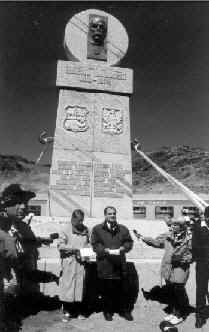
Su objetivo fue comunicar los pueblos entre si. Pero, sobre todo, contribuir a la gobernabilidad y vincular las diversas culturas, espacios, recursos e historias que formaban parte del Peru. El monumento en su memoria, que fue colocado hace 10 anos, donado por Polonia, está situado en Ticlio en la altitud de 4818 m.s.n.m.


En 1859 presentó al gobierno peruano un plan muy valiente para la construcción de una línea de ferrocarril que conectaba la costa del Pacífico desde el puerto del Callao con los abundantes recursos del interior del país el centro de las minas de La Oroya. El ferrocarril central de Perú es considerado una maravilla de la ingeniería, el ferrocarril más alto del mundo, y está maravillosamente diseñado. Este ferrocarril tiene 218 kilómetros recorridos largos en su mayoría a la altura por encima de 2.000 m (6.500 pies). Sube el nivel del mar en el Callao hasta una altura de 15.806 pies (pasa Ticlio) por medio de zigzags y muchos zigzags dobles. Hay aproximadamente 100 túneles (de casi 4 millas de longitud total) y los puentes, algunos de los cuales son mayores proezas de ingeniería (uno de los puentes es de 230 pies de altura). Es difícil visualizar cómo esta tarea se pudo haber logrado con el equipo de construcción relativamente primitivo, gran altura y el terreno montañoso como obstáculos.


Ernest  Malinowski es considerado héroe nacional de Perú tambien porque se enroló en las filas peruanas para luchar contra la escuadra española. En 1865, Malinowski dirigió las obras de construcción para la defensa del Callao contra la escuadra española. Se construyó una cadena de fortificaciones que sirvieron para emplazar los cañones. El gobierno peruano lo incluye con sentido agradecimiento en la lista de los héroes "Vencedores del Dos de Mayo".


tuvo la responsabilidad de la fortificación y el equipamiento de la defensa del puerto del Callao, introduciendo por ejemplo por primera vez en un combate sudamericano la utilización de la comunicación telegráfica para intercambiar coordenadas de disparo entre los diferentes puntos de artillería.
Gracias a la excelente defensa nacional pudimos vencer a la escuadra invasora en aproximadamente 05 horas. Es importante mencionar que la victoria frente a España impidio una posible reconquista Europea de nuestro pais, tal como ya habia sucedido en Mexico anteriormente, por ello fue el afianzamiento de nuestra independencia lograda tan solo hace 42 años antes (1824, Batalla de Ayacucho), realza la importancia de nuestra victoria del 02 de Mayo, a nivel mundial.


Pronto se le delegaran varias responsabilidades como la implementación de la Primera Escuela de ingenieros, la construcción de vías férreas para el transporte de mercancías hacia la costa, la remodelación de la ciudad de Arequipa y un estudio sobre la moneda nacional y la mejora en la acuñación de la misma.


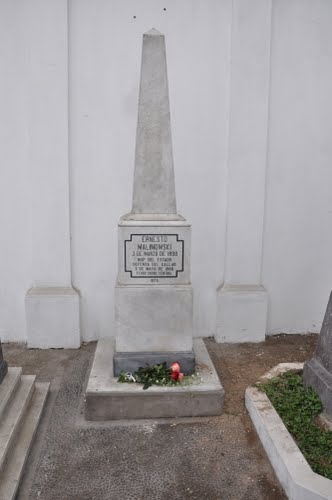
Falleció en 1899 y sus restos fueron enterrados en el Cementerio Presbítero Maestro, donde el presidente José Pardo y Barreda le mandó construir un mausoleo.


Ing. Ernesto Malinowski
Adam Stanisław Hipolit Nepomucen Ernest Malinowski born January 5, 1818 in Seweryny (Podolia), Poland died March 2, 1899 in Lima, Peru was a Polish engineer.


He was born in 1818 in Podolia (now in northern Ukraine). Son of Polish aristocrat Ślepowron Jakub Malinowski and z Kołodna Świeykowska Anna, daughter of the governor of Podolia. His father, a member of the army of the Duchy of Warsaw, participated in several uprisings for independence of Poland.

He studied at the Lyceum primary Krzemieniec and then, after the exile of his family to France at the Lycée Louis-le-Grand in Paris. After finishing school, he entered in 1834, the Ecole Polytechnique and then, in 1836, the Ecole des Ponts et Chaussées.

Malinowski built at the time the highest railway in the world Peru Central Railway crossing the Andes in 1871-1876. The engineer is also the builder of other railways in Peru - for example the Southern Railroad, the Santa and Quito in Ecuador made the railroad - Guayaquil.
Its aim was to communicate the people together. But above all, contribute to the governance and linking the diverse cultures, spaces, resources and stories that were part of Peru. The monument in his memory, which was placed 10 years ago, donated by Poland, is located in Ticlio at the altitude of 4818 m.s.n.m.


In 1859 the Peruvian government presented a very courageous for the construction of a railway line connecting the Pacific coast from the port of Callao with the abundant resources within the country the center of La Oroya mining plan. The Central Railroad Peru is considered an engineering marvel, the highest railway in the world, and is beautifully designed. This railway is 218 kilometers long runs mostly height above 2,000 m (6,500 ft). Sea level rises in Callao to a height of 15,806 feet (pass Ticlio) through many zigzags and double zigzags. There are about 100 tunnels (almost 4 miles total length) and bridges, some of which are greater feats of engineering (one bridge is 230 feet tall). It is difficult to see how this task could have been accomplished with relatively primitive construction equipment, high altitude and mountainous terrain and obstacles.


Ernest Malinowski is considered a national hero of Peru also because he joined the Peruvian ranks to fight the Spanish squad. In 1865, Malinowski led the construction for the defense of Callao against the Spanish fleet. a chain of fortifications which served to place the cannons was built. The Peruvian government includes meaningful appreciation in the list of heroes "Winners of the Dos de Mayo".


He was responsible for the fortification and defense equipment Callao port, for example by introducing for the first time in a South American combat the use of telegraphic communication to exchange firing coordinates between the different points of artillery.


Thanks to the excellent national defense were able to defeat the invading fleet in about 05 hours. It is noteworthy that the victory against Spain prevented a possible European conquest of our country, as had already happened in Mexico before, why was the strengthening of our independence achieved only 42 years earlier (1824, Battle of Ayacucho) ago highlights the importance of our victory on May 2, worldwide.

He was soon to delegate some responsibilities as the implementation of the first school of engineering, construction of railways to transport goods to the coast, the remodeling of the city of Arequipa and a study of the national currency and the improvement in the minting Of the same.


He died in 1899 and his remains were buried in the Cemetery Master Priest, where President José Pardo y Barreda commanded him to build a mausoleum.


Ing. Ernesto Malinowski
Adam Stanisław Hipolit Nepomucen Ernest Malinowski né Janvier 5, 1818 à Seweryny (Podolie), la Pologne est décédé le 2 Mars 1899 à Lima, au Pérou était un ingénieur polonais.


Il est né en 1818 en Podolie (aujourd'hui dans le nord de l'Ukraine). Fils de aristocrate polonais Slepowron Jakub Malinowski et z Kołodna Świeykowska Anna, fille du gouverneur de Podolie. Son père, un membre de l'armée du duché de Varsovie, a participé à plusieurs soulèvements pour l'indépendance de la Pologne.

Il a étudié au lycée primaire Krzemieniec puis, après l'exil de sa famille en France au Lycée Louis-le-Grand à Paris. Après avoir terminé l'école, il est entré en 1834, l'Ecole Polytechnique, puis, en 1836, l'Ecole des Ponts et Chaussées.

Malinowski construit à l'époque le plus grand chemin de fer dans le monde du Pérou Central Railway traversée des Andes en 1871-1876. L'ingénieur est également le constructeur d'autres chemins de fer au Pérou - par exemple le chemin de fer du Sud, le Santa et Quito en Equateur ont fait le chemin de fer - Guayaquil.


Son but était de communiquer les gens. Mais surtout, contribuer à la gouvernance et de relier les diverses cultures, des espaces, des ressources et des histoires qui faisaient partie du Pérou. Le monument à sa mémoire, qui a été placé il y a 10 ans, offert par la Pologne, est situé dans Ticlio à l'altitude de 4818 m.s.n.m.

En 1859, le gouvernement péruvien a présenté un très courageux pour la construction d'une ligne de chemin de fer reliant la côte du Pacifique du port de Callao avec les ressources abondantes dans le pays du centre du plan d'exploitation minière de La Oroya. Le Central Railroad Pérou est considéré comme une merveille d'ingénierie, le plus haut chemin de fer dans le monde, et est magnifiquement conçu. Ce chemin de fer est de 218 kilomètres de longues courses essentiellement hauteur au-dessus de 2.000 m (6.500 pieds). niveau de la mer monte à Callao à une hauteur de 15,806 pieds (passer Ticlio) à travers de nombreux zigzags et zigzags doubles. Il y a environ 100 tunnels (près de 4 miles de longueur totale) et les ponts, dont certains sont plus des prouesses de l'ingénierie (un pont est de 230 pieds de haut). Il est difficile de voir comment cette tâche aurait pu être accompli avec un équipement relativement primitive de construction, haute altitude et le terrain montagneux et obstacles.

Ernest Malinowski est considéré comme un héros national du Pérou aussi parce qu'il a rejoint les rangs du Pérou pour lutter contre l'équipe espagnole. En 1865, Malinowski a dirigé la construction de la défense de Callao contre la flotte espagnole. une chaîne de fortifications qui a servi à placer les canons a été construit. Le gouvernement péruvien comprend l'appréciation significative dans la liste des héros »Les gagnants du Dos de Mayo".


Il était responsable de l'équipement de fortification et de défense le port de Callao, par exemple en introduisant pour la première fois dans un combat d'Amérique du Sud, l'utilisation des communications télégraphiques pour échanger des coordonnées de tir entre les différents points d'artillerie.

Merci à l'excellente défense nationale ont été en mesure de vaincre la flotte d'invasion dans environ 05 heures. Il est à noter que la victoire contre l'Espagne a empêché une éventuelle conquête européenne de notre pays, comme cela avait déjà eu lieu au Mexique avant, pourquoi le renforcement de notre indépendance a été atteint seulement 42 ans plus tôt (1824, bataille de Ayacucho) il y a souligne l'importance de notre victoire le 2 mai, dans le monde entier.


Il ne tarda pas à déléguer certaines responsabilités en tant que la mise en œuvre de la première école de l'ingénierie, la construction des chemins de fer pour le transport de marchandises vers la côte, le remodelage de la ville d'Arequipa et une étude de la monnaie nationale et l'amélioration de la frappe de la même.
Il est mort en 1899 et ses restes ont été enterrés dans le cimetière de Maître Priest, où le président José Pardo y Barreda lui ordonna de construire un mausolée.